Built around the problems cemetery offices actually have.
Plotbase was designed from the daily reality of municipal cemetery operations — the card indexes, the radio calls, the spreadsheet nobody trusts — not adapted from generic asset-management software.
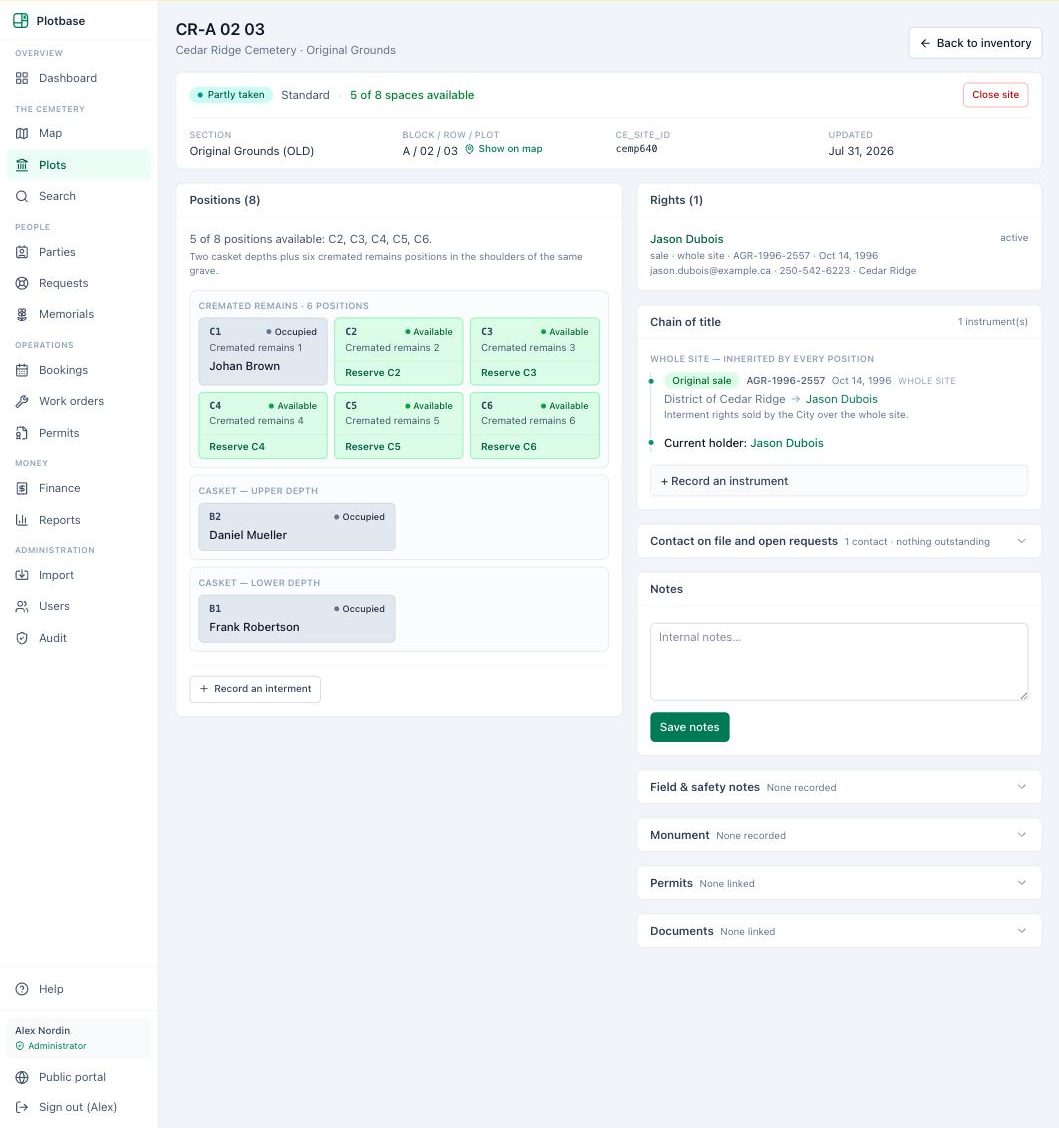
One grave is never just one grave.
A single site can hold casket burials at two depths, cremated remains in the shoulders, and niches — up to eight positions, each with its own status and its own rights holder. Card indexes and single-status systems can’t answer the question staff hear every day: “Is this grave available?”
- Position-by-position availability at a glance
- Interment rights recorded against the exact position sold
- Full chain of title, from original sale through every transfer
Scheduling by phone, whiteboard and hope.
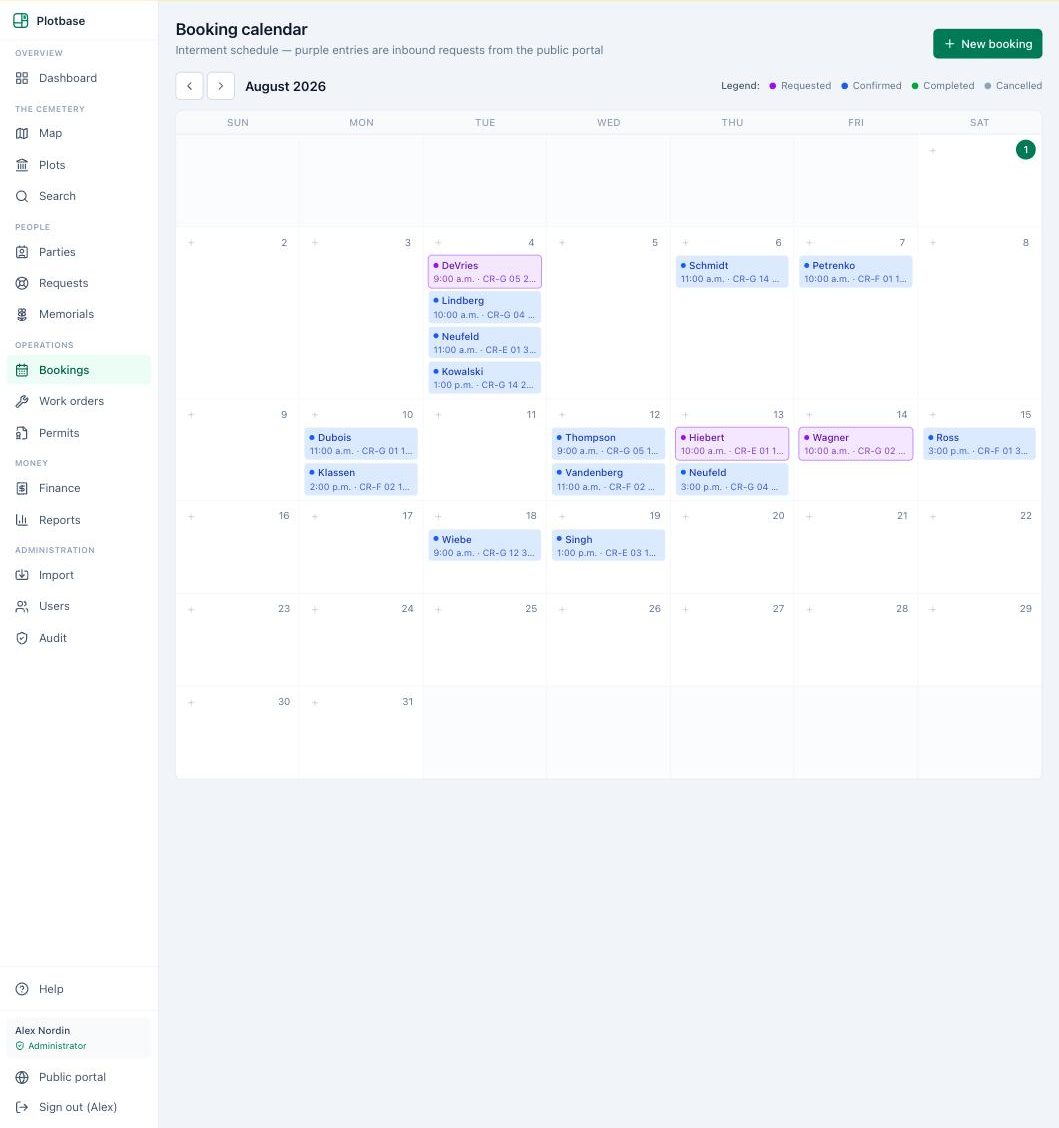
Funeral homes call, families walk in, the grounds crew finds out about tomorrow’s interment this afternoon. When the schedule lives in three places, double-bookings happen at the worst possible moments.
- Every booking tied to a real plot and position
- Status flow from requested through confirmed to completed
- Inbound requests from the public portal land on the same calendar
The office runs on software. The crew runs on paper.
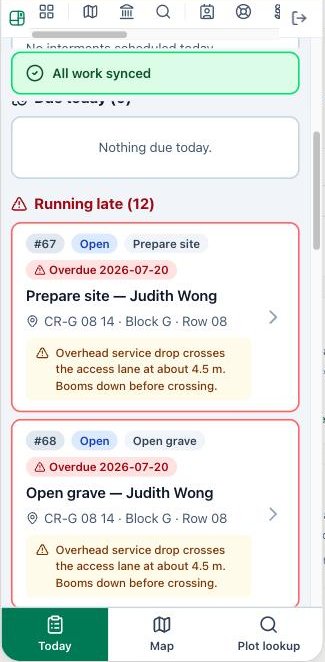
Work orders get printed, completion photos live on personal phones, and what the crew did and what the record says quietly drift apart.
- Today’s interments and work orders on the crew member’s phone
- Before-and-after photos and safety notes captured at the graveside
- Completions land on the office record the moment they’re saved
Cemetery charges, re-keyed by hand into city finance.
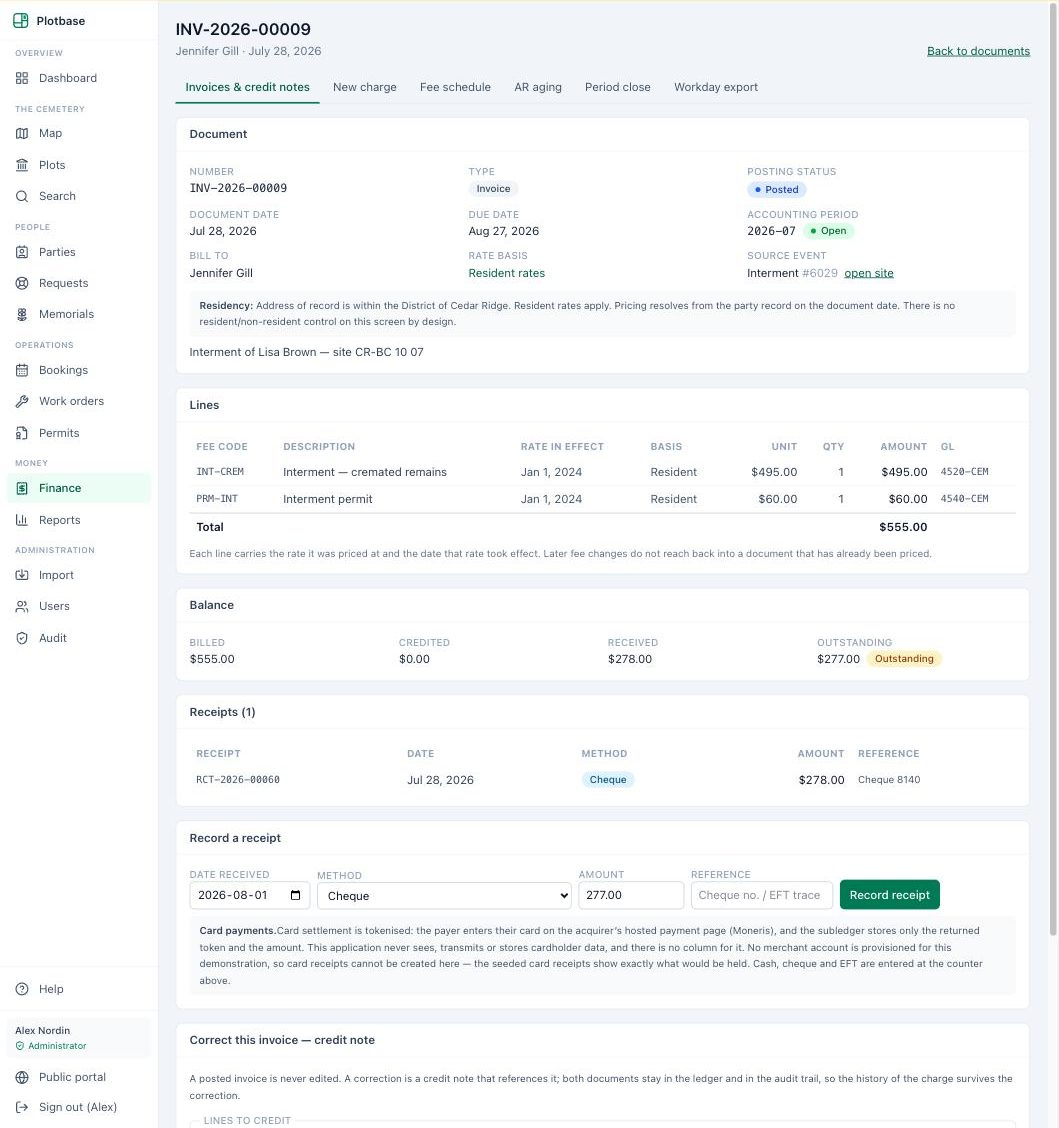
Fees quoted from a PDF, invoices raised in a spreadsheet, receipts re-typed into the corporate system. Every re-keyed number is a reconciliation problem waiting to happen — and care-fund obligations are tracked nowhere at all.
- Date-effective fee schedule with resident and non-resident rates
- Invoices, receipts, credit notes, AR aging and period close
- Care-fund contributions computed and reported on every applicable sale
- Summarized journal export to your ERP — no re-keying
Fifty years of records, entered by a hundred hands.
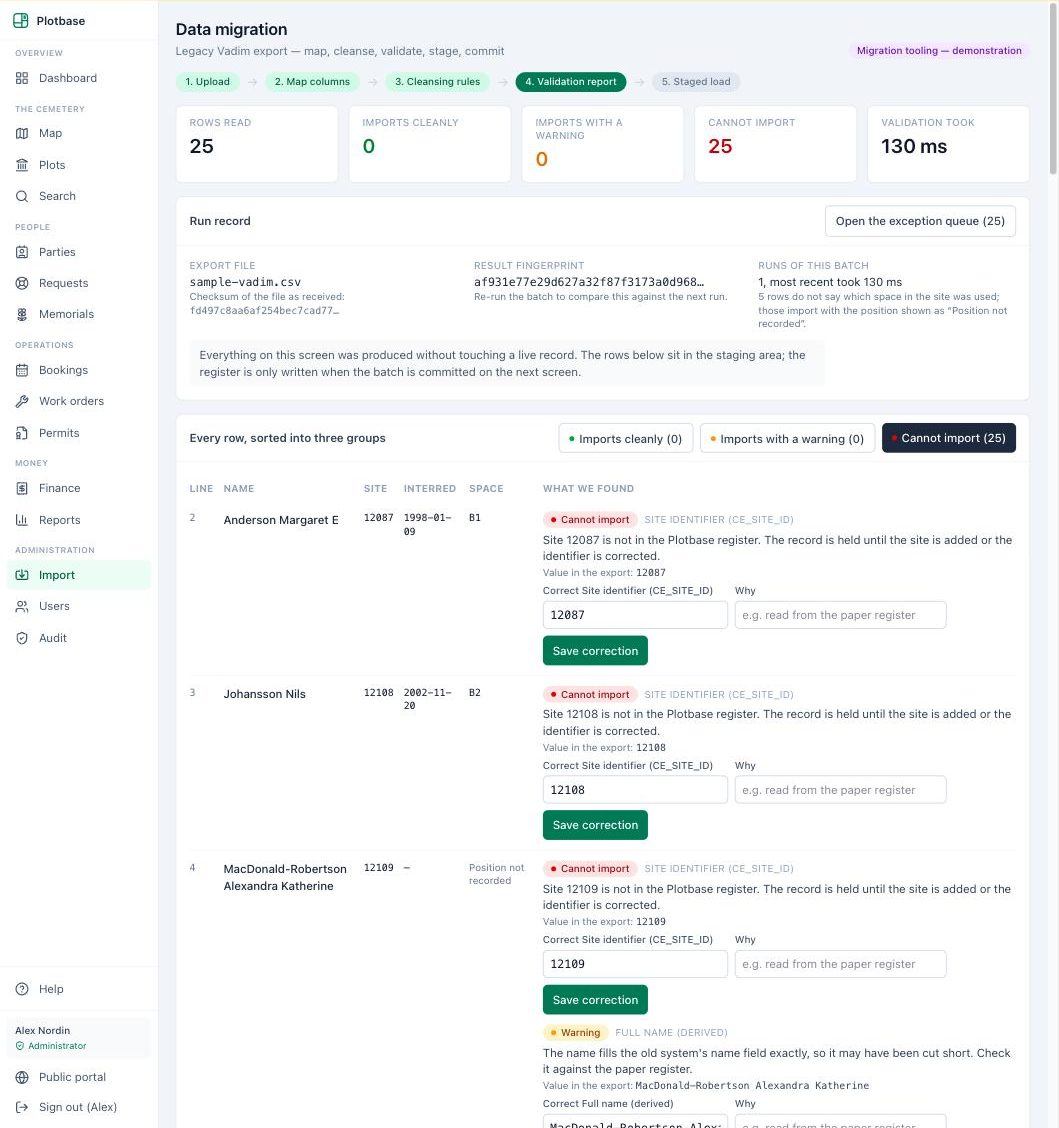
Every vendor promises your legacy data will “import cleanly.” Anyone who has seen a fifty-year-old register knows better: dates in a dozen formats, names three different ways, and records that simply don’t add up.
- Column mapping proposed by the system, confirmed by you
- Cleansing rules with visible before-and-after examples
- Validation report before anything is written
- An exception queue where flagged records wait for a human — originals intact, nothing discarded
Every genealogy request is a staff interruption.
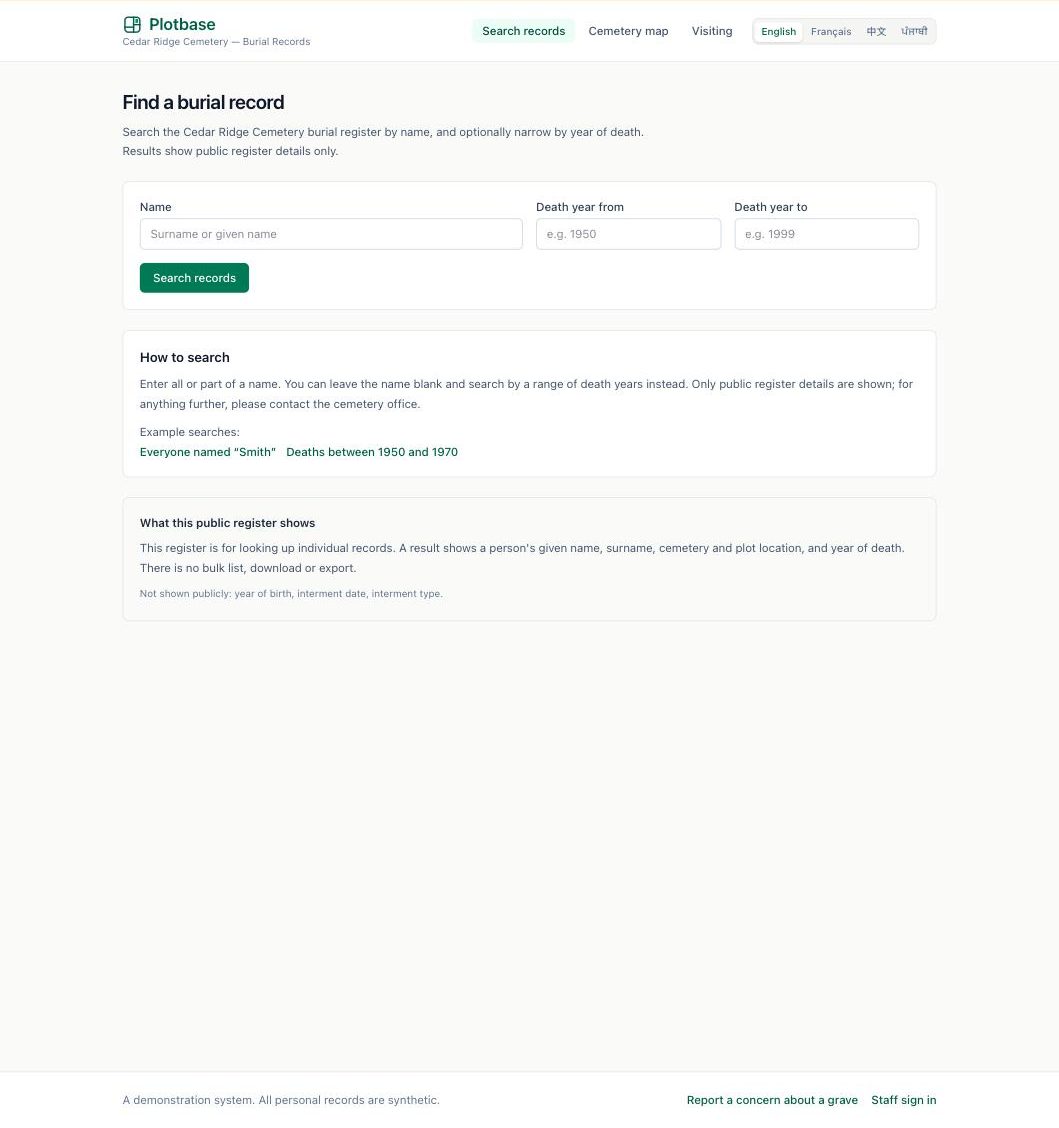
“Where is my grandmother buried?” is a wonderful question — and answering it by phone, one paper lookup at a time, consumes hours of counter time every week.
- Public burial-record search by name and year
- Interactive cemetery map with walking directions to the grave
- Digital memorials, moderated and approved by your staff
- Only public register details shown — privacy stays intact
See these workflows live.
A demonstration takes under an hour and uses realistic cemetery data.
Book a demo